My photo
Santa Barbara, CA, United States
I enjoy creating original wine-pairing recipes that are healthful and delicious. I work for Touring & Tasting a Santa Barbara based wine club and national magazine as Food Editor. However, I am not paid for this blog and the opinions expressed here are strictly my own. I received my Personal Chef Skills Competency Award from the SBCC's School Of Culinary Arts. In 2012, I started Inside Wine - Santa Barbara with pal Lila Brown which features wine tastings with winery owners and winemakers. I also serve on the Board of the Santa Barbara Culinary Arts group, which had Julia Child as one of the founding members and funds scholarships for SBCC culinary students in her name.

Search This Blog

Tuesday, October 18, 2011

The Magic Of Mirepoix -- Coq Au Vin Cookoff

Paso Robles Syrah
Last week, Touring and Tasting's magazine editor, Wendy van Diver, asked if I'd prepare Coq Au Vin to compare recipes for the upcoming issue. What fun! I love to make food and share it with the office--especially if there are several bottles of Syrah from different wineries to taste along with it! I already have a tasty, EASY recipe for coq au vin on my blog here. But in week #7 of Culinary class, we made the dish with mirepoix, in classic French style, to add flavor and body to the sauce without needing flour for thickening. I adapted the recipe we used in class. The following is a more time consuming recipe than the one on my 2/18/10 post, but the rich, flourless sauce is worth the extra effort.
TAMA'S CLASSIC COQ AU VIN WITH PARSLEY POTATOES:
Coq au vin
olive or vegetable oil
6 chicken legs, cut into thigh and drumstick
salt and pepper
4 strips bacon, cut into 1" pieces
*1 large onion, fine dice
*2 carrrots, fine dice
*3 stalks celery, fine dice
*these three make the mirepoix which should be in a ratio of 2:1:1 -- 50% onion, 25% carrot, 25% celery
1/2 head of garlic, peeled and sliced
2 cups chicken broth
1 4 oz. can of tomato paste
1 bottle red wine--red Rhone, Beaujolais or Syrah
2 tsp. thyme, in two parts
1 bay leaf
12 pearl onions, blanched
2 packs button or Crimini mushrooms
Parley Potatoes:
24 baby Yukon gold potatoes
2 Tbsp. butter
2 Tbsp. minced parsley
salt and pepper
You should have a sautoir or saute pan for this dish: a large frying pan with straight sides and tight fitting lid. Along with a sharp, top quality chef's knife, a sautoir is a must-have. It goes right from the stove top into the oven, plus the wide base is excellent for reducing sauces.
Mirepoix
Preheat your oven to 350 degrees. Sprinkle salt and pepper over all sides of the chicken. Heat 1/2" of oil in your sautoir over medium heat (do not let it smoke) and place half the chicken pieces in it. Brown the chicken on both sides--the oil should be sizzling and bubbling lightly--turn down the heat if the oil starts to smoke or bubble furiously. Set the first batch aside and brown the second batch. Pour off most of the oil and put the bacon in the pan and saute it until browned. Lower the heat and add the mirepoix and let it sweat (cook without browning) until the onion is translucent. Add the sliced garlic and cook just until it releases a garlic smell. Then, add the broth and scrape up and mix in the fond (the browned bits on the bottom of the pan) using a wooden spoon. Add the tomato paste and 1 tsp. thyme, stir well. Nestle the chicken into the mirepoix. Pour in the red wine until the level is 3/4 up the sides of the chicken. Cover tightly and put in the oven for 1 1/2  hours, turning the chicken over halfway through the cooking (total cooking time will be about 2 1/2 hours).
Start preparing the onions and mushrooms: to blanch the onions, first cut the root end off each one but do not peel off the papery husk. Boil a pot of water large enough to fit the onions and put them into the boiling water for 3 minutes. Remove them into a large bowl filled with ice and water. When they have cooled, the outer peel will come off easily. In a separate saucepan, melt the butter and cook the drained onions for about 5  minutes, stirring occasionally, until they are lightly browned. Add the mushrooms and sprinkle with the white wine, thyme and salt and pepper to taste.  Cook and stir until mushrooms are done. Take out the coq au vin and remove the chicken to a plate. Strain the juice and return to the sauce pan. Stir in the vegetables and add the chicken which will continue to cook while you prepare the potatoes.
Parsley potatoes: Put the potatoes into a pot and cover with cold water. Bring to a boil. Cook until done--test by piercing a potato with a fork to see if the inside is soft. Drain and put into a bowl with the butter. Toss to coat evenly and sprinkle with salt and pepper to taste. Top with minced parsley.
Serve the coq au vin with the potatoes and a Syrah or Rhone blend. We had the 2007 Venteaux Vineyards estate Syrah, the 2008 Sculpterra estate Syrah, the 2007 Vina Robles estate Syrée (a blend of Syrah and Petit Sirah) and the 2007 Calcareous Vineyard estate Syrah--all delicious. All four are from Paso Robles and gave us a good taste of the range of flavor profiles in the varietal.


Thursday, October 13, 2011

Exploding Watermelons and Pork That Glows In The Dark

Four years ago, the New York Times published an article titled "Fake goods and unsafe food threaten Chinese exports" after thousands of dogs and cats in the USA became ill or died from melamine in pet food imported from China. The Washington Post declared "For years, U.S. inspection records show, China has flooded the United States with foods unfit for human consumption. And for years, FDA inspectors have simply returned to Chinese importers the small portion of those products they caught -- many of which turned up at U.S. borders again, making a second or third attempt at entry." ("Tainted Chinese Imports Common") The problems with imported Chinese food was outlined by the US Department of Agriculture :
1. unsafe veterinary drug residue in farm-raised shrimp and fish
2. unsafe processing and handling,with the most common problems cited by FDA being “filth, unsafe additives, inadequate labeling, and lack of proper manufacturer registrations"
3. lack of oversight, since most of China's 200 million farms and food companies are not certified
("Imports From China and Food Safety Issues")

Besides the pet food contamination, problems in China's food supply have included 300,000 children
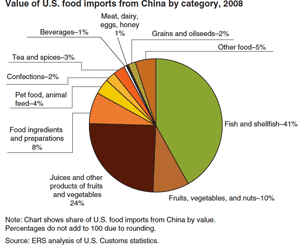
sickened with kidney ailments after consuming infant formula adulterated with melamine, an industrial chemical added to raw milk to raise its apparent protein content, use of toxic dye in duck feed, chili sauce, and other foods, use of industrial bleach to whiten noodles, carcinogenic drugs in fish and shrimp, poisoning from steroids used in pork production, illegal dyes in foods, insect filth in bean curd, filth from insects and animals in dried mushrooms and garlic and fluoroquinolone and chloramphenicol (known carcinogens) in honey, and heightened levels of lead and cadmium from contaminated soils in the Pearl River Delta region of southern China. This matters to the US because we are importing more and more cheap food from China. The majority of our apple juice, garlic, canned mandarin oranges, fish, and shrimp come from them.

I visited China in 1987, when people were still wearing Mao jackets and farming the land by hand. From our tour bus, we could see into the mud huts where farmers lived and see them in the fields shouldering the plow since they were too poor to even have an animal to pull it. Their economy has grown by more than 90x its size since then. But farmers are still struggling to make a living, making about $900 a year vs. city workers making $2,965 a year.

In a land where rural life has been difficult, imagine!, between 20-43 million Chinese died of starvation in the 1950s, the financial incentive to cut corners or add toxic additives that can increase the value of product--like adding melamine to add weight and apparent protein to milk--is seductive for the struggling peasant class. I guess when a farmer is scrabbling to get by,  a cheap additive like clenbuterol  to make their pigs leaner and bring a better price is hard for them to resist--especially when it may take years for a human to feel the effects of the drug on their respiratory system.  Add to this endemic corruption and widespread environmental pollution, with a real environmental disaster of unclean water and heavy metals in the soils from industrial smokestacks belching smoke that is not regulated, and it not surprising that the Chinese people are getting angry. So angry, in fact, that some protesters have even set fire to themselves.

Some unexpected results of unregulated chemical additions to food have been  exploding watermelons (see video) and pork that glows in the dark! (www.Chinasmack.com)

China's response to these problems have been typically heavy-handed but mostly symbolic. 57 out of an estimated 10 million government officials were sanctioned for taking bribes related to food safety issues. The city of Chongqing approved the death penalty for "primary culprits, recidivists and criminals who cause serious health hazards or get a huge amount of illegal profit", though the real aim of the provision seems to be the Mafia-style gangs called "black societies".


Another of China's solutions to the problem of food contamination has been organic food grown behind guarded gates for the rich and political elite.  According to the LA Times story, "their limited supply is sent to Communist Party officials, dining halls reserved for top athletes, foreign diplomats, and others in the elite classes. The general public, meanwhile, dines on foods that are increasingly tainted or less than healthful — meats laced with steroids, fish from ponds spiked with hormones to increase growth, milk containing dangerous additives such as melamine".


Here in the US, we are mostly complacent. We have no laws mandating disclosure of the food source if it is repackaged here or added to other ingredients. So, if powdered milk with melamine is imported into the US to be make into brownie mix--guess what? You won't know. "The FDA inspects less than 1 percent of food shipments destined for the United States, and it performs laboratory examinations on
an even smaller percentage of shipments." ("A Decade Of Dangerous Food Imports From China") .


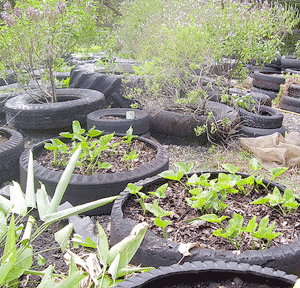
My solution? Buy local organic foods whenever possible, in season (because out-of-season produce is sure to be imported) and as unprocessed as possible. Make your own baked goods from ingredients you know are made in the US--it will be better for your health, better for US jobs, better for your community--since revenue goes to your neighborhood farms and ranchers. Farmer's markets are great sources for fresh, clean food--and--you can grow your own food in gardens, pots and even in old tires on your driveway!


Wednesday, October 5, 2011

Risotto--Week #7 Culinary Class

This week in Culinary class, we made risotto and coq au vin. "Riso" is "rice" in Italian--"otto" is a suffix that indicates "small" and "adorable", so "risotto" would be "adorable little rice". However, as Chef Fredericks pointed out, in the culinary world, risotto is not a term for rice but for the cooking technique of gradual and incremental addition of liquid during the cooking process. So, it is possible to make butternut squash risotto without any rice whatsoever, just with cubes of the squash cooked and stirred as liquid is added--creating a creamy sauce around the cooked chunks. View a recipe for Fresh Fava Beans With Risotto.
I dislike the texture of most veggie burgers--too mushy. I've played around with crunchy nuts and found this combination works well. I've made these to bring to a traditional bbq so I can have something off the grill instead of hot dogs or beef. Keep them chilled in a cooler, between parchment paper, if you transport them, since raw egg is a food safety concern if left at room temperature for more than a few minutes.
Parmesan Nut Burgers:
olive oil
2 Tbsp. onion, finely minced
1 clove garlic
3 button or crimini mushrooms
pinch oregano
1/8 tsp. marjoram
1/4 tsp. basil
1 egg
1/2 cup grated Parmesan cheese
1/4 cup chopped toasted almonds
approximately 3/4 cup Panko crumbs
Coat the bottom of a frying pan with a light film of olive oil, heat over low heat. Add the onion, garlic and mushrooms. Sweat the vegetables (cook without browning) until onion is translucent. Stir in the oregano, marjoram and basil and remove pan from heat to cool. In a mixing bowl, stir the egg with a fork until well mixed. Add the Parmesan cheese, almonds, Panko and cooled onion mixture (use a spatula to scrape into the mixing bowl). Mix well with enough Panko to form a moist ball. Divide into two parts and pat each one into a patty. Coat the bottom of a frying pan with oil, heat over medium low and add the patties. Cover the pan with a lid and turn the heat to low. Cook the patties until browned on the bottom, flip with a spatula and brown the other side. Serve on bun with toppings of your choice. Makes 2 servings.

Thursday, September 29, 2011

Fluffy Gnocchi - and Wine Themed Crossword #2

Getting up at 5:30 am for the Culinary Fundamentals class has reprogrammed my biological clock. The positive side is that I'm seeing a lot of beautiful sunrises! My daughter, who loves potato gnocchi, will be happy to know that I learned the secret for making them light and fluffy. My problem has been that I've followed recipes slavishly and missed the secret that it is not the recipe but the technique that is important. Like fresh pasta dough, gnocchi dough should be mixed with the minimum amount of flour to keep them light.

In class, we made gnocchi with garlic and chili--I made mine with goat cheese, browned butter and sage to pair with a nice Pinot Noir--the Torii Mor, La Colina Vineyard from the Dundee Hills of Oregon. Goat cheese and Pinot is a terrific pairing.
Homemade Gnocchi With Goat Cheese and Brown Butter Sauce:
2 large russet potatoes
2 egg yolks
4 oz. room temperature goat cheese
All-purpose flour, about a cup
4 Tbsp. butter
2 Tbsp. finely minced sage
2 Tbsp. finely minced parsley
4 Tbsp., approximately, of grated Parmesan
Salt and fresh ground black pepper
Pierce the potatoes with the tines of a fork to release steam when they cook. Bake the potatoes in a 350 degree oven until done--turn once during the approximate 1 hour baking time. Remove and let cool a bit. In the  meantime, mix the egg yolks and goat cheese. Grate the potatoes onto a tray or into a large bowl. Add the egg/cheese mixture and a half cup of flour. Mix them together with your fingers and gather into a soft dough, adding flour as needed. Add the least amount of flour possible so the dough stays light. As the dough starts to come together, press it gently into a four balls. On a lightly floured board--again using as little flour as possible--roll out each ball into a coil of dough, gently pressing out any air pockets. Cut into 1/2" pieces. For use with sauces like marinara, one would press the dough with the back of a fork to make grooves in one side to hold the sauce. With a butter sauce, there is no need to add the grooves as the butter will easily coat the gnocchi. Serves 4.
Tips on Technique from Chef Fredericks:
1. Cut the end of the potatoes at an angle--this part will go on the grater first.
2. Use the skin of the potato to protect your hands from the hot interior. The hot grated potato will let off steam, so a tray is good for spreading the potato out to prevent the gnocchi from being sodden.

Wine Themed Crossword by Tama


3. Press the dough gently into coils--there will be some air pockets that you want to get rid off. Cut the coils into manageable lengths when rolling. See video of Chef Fredericks forming and rolling coils.
4. See video of Chef Fredericks to see how to make grooves on one side of the gnocchi with a fork.

Try your hand at my second attempt at creating a wine themed crossword!

Wine Themed Crossword by Tama


Thursday, September 22, 2011

Luscious Warm Peaches With Chili and Maple Syrup

WEEK #5 CULINARY FUNDAMENTALS CLASS:
Lasagne from scratch was our task this week--starting with making tomato sauce. We covered the 5 Mother Sauces this week:

  1. Béchamel sauce 
  2. Espagnole sauce 
  3. Hollandaise
  4. Ttomato sauce
  5. Velouté
Chef Fredericks showed us how to start the pasta d'uva (egg pasta) with the yolks and oil in a well built into a mound of flour. The video shows how to mix the yolks and oil into the flour with a fork--when the dough comes together enough to be handled, then you knead it for 20 minutes, using the minimum flour required to keep it from sticking to the board or your hands. Then, roll it out in the pasta machine (at home I use the KitchenAid pasta attachment) and cut it to size. Fresh pasta doesn't need to be boiled before using.
I purchased some fantastic peaches at the organic market this week and have gone crazy eating them at every meal. I started dreaming of warm peaches with a kick of chili pepper and made myself a snack this afternoon with maple syrup and whipped cream. Triple yummm! This only takes a few minutes to make. WARM PEACHES WITH CHILI AND MAPLE SYRUP: 1 large ripe peach 2 Tbsp. butter 2 Tbsp. maple syrup dash dessert wine (I used a good Port) sprinkle chili powder whipped cream Halve the peach and remove the pit, slice each half into fourths. Melt the butter in a saute pan over medium heat and sautee the peach slices briefly on each side. You want them warm on the outside but not mushy on the inside. Pour the maple syrup over them and flip them to coat both sides. Remove them to the serving plate. Add the dash of dessert wine or sherry and reduce the sauce for a minute while whisking. When it is thickened, pour decoratively around the peach slices. Sprinkle them with chili powder and top with whip cream. You are excused if you lick the plate afterwards!

Wednesday, September 14, 2011

How To Use Your Cast Iron Teapot For Dobin Mushi

WEEK #4 CULINARY FUNDAMENTALS CLASS:
On the agenda: soups! We made an easy Broccoli Cheddar Soup and a tasty French Onion Soup. I learned a lesson this week--be careful when putting anything in the salamander as the handle is spring-loaded and when released, it will send the food shooting up towards the flame. Instead of nicely toasting my bread and Gruyere topping, I left the French onion soup in too long (it only takes seconds to broil in the salamander) and my bread was black. It was especially sad because I'd taken care to caramelize my onions to a perfect, even dark brown.
Incidently, I discovered why the exposed white bread on my French onion soup instantly went from nicely browning to burnt, by reading the second book of the behemoth 2,438 page (six volume) Modernist Cuisine. The radiant heat from the salamander is reflected by the color white. As soon as the white turns to brown, the radiant heat is quickly absorbed and will turn to black in a blink of an eye. One lesson learned--cover the bread entirely with Gruyere so none is vulnerable to burning!

I've only read book 2 thus far, on Techniques and Equipment and have already been surprised by a number of things that have been proven via scientific testing. For example, did you already know the answers to these questions?
1. Why oven walls should be shiny and reflective and not black.
2. Why the amount of food loaded into an oven is inversely related to cooking time--in other words, it actually takes less time to cook food when the oven is full versus when it has just a small portion of food loaded into it.
3. Why you can never raise the grill high enough in your outdoor barbeque to change the cooking time (hint: controlling the oxygen flow is the only way to control the heat of the barbeque)
4. Why used cooking oil will cook food better than fresh, unused oil.
5. How to make powdered soup that will melt in your mouth?
Alas, I was only able to borrow the one book from the series--which costs $625 for the set, but will be looking to see if I can find another friendly loan to read the rest. It's not hyperbole when the website says:
"In Modernist Cuisine: The Art and Science of Cooking, Nathan Myhrvold, Chris Young, and Maxime Bilet—scientists, inven­tors, and accom­plished cooks in their own right—have cre­ated a six-volume 2,400-page set that reveals science-inspired tech­niques for prepar­ing food that ranges from the oth­er­worldly to the sub­lime. The authors—and their 20-person team at The Cooking Lab—have achieved astound­ing new fla­vors and tex­tures by using tools such as water baths, homog­e­niz­ers, cen­trifuges, and ingre­di­ents such as hydro­col­loids, emul­si­fiers, and enzymes. It is a work des­tined to rein­vent cooking."
Here's the New Yorker article on Modernist Cuisine.
The best thing I had to eat this week was Dobin Mushi that I made with black cod and Matsutake mushrooms. My father was an Issei--first generation Japanese-American--and closely involved with the small Japanese community in Colorado from the 1950s on. Matsutake mushrooms grow only on the fallen limbs of Ponderosa pine trees and pockets of them can be found throughout the Rocky Mountains. Each Japanese-American family had their prime harvesting area, kept ultra secret from everyone else. Our was in the Red Feather lakes region and we would come back with a sackful of fragrant Matsutake after a lovely day picnicking and foraging. These days Matsutake cost upwards of $49 a pound. They are highly fragrant with pine and a touch of cinnamon.

The dried Matsutake are nothing like the fresh, but are affordable and give a smaller scent of pine to dishes plus the good umami flavor (the savory taste). Black cod is plentiful this time of year off the California coast and has a delicate texture and buttery oiliness to it. As a result, this delicate soup has a sheen of oil that is very delectable. Serve with Japanese white rice and a very dry, minerally French Chablis. We paired the Dobin Mushi with the 2009 Domaine William Fevre Chablis. We enjoyed sipping this light-bodied, crisp, citrusy white Burgundy while watching the sun set over the Pacific, then with our meal.

Do you have a cast iron tea pot? You may not know this--but it is used for steaming Dobin Mushi. Find a large steamer where the cast iron tea pot will fit inside, with the lid on. My cast iron tea pot fits 4 cups and is perfect for a serving of Dobin Mushi for two:

DOBIN MUSHI--STEAMED MATSUTAKE SOUP:
1 tsp. instant dash powder *feel free to make your own dash from scratch!
4 cups water
1 4" piece of konbu kelp, washed
1/4 cup dried Matsutake (or use 1/2 cup fresh and add with the fish at the end)
1" ginger root, peeled and sliced into quarters
1 Tbsp. approximate Mirin (Japanese cooking sake)
1 Tbsp. approximate soy sauce
1 tsp. approximate salt
1 carrot (can cut decoratively)
1/2 lb. black cod, skin on, cut into 2" strips
Slices of yuzu or lemon
In a saucepan, boil the water and add the dried Matsutake. Turn off the heat and add the dashi powder, konbu and ginger root. Let sit for 10 minutes. Remove the ginger root pieces from the soup and add the Mirin, soy sauce and salt. Stir and taste. Then add a bit more of the Mirin, soy sauce or salt, only if needed, to find a balance between saltiness, sweetness and the seafood taste of the dashi. Fill the steamer with water only to the bottom of the interior steamer (in other words, so water level does not come up to the cast iron pot). Ladle the soup into the cast iron pot and add the carrot. Put pot into the steamer, cover and turn the heat to medium. When the water starts to steam, time the cooking for seven minutes. Turn off the heat and remove the cast iron pot. Add the fish and let sit for two minutes before serving. Serve with yuzu or lemon to squeeze on the fish. See wine pairing notes above.

Thursday, September 8, 2011

All Burners Firing -- Sautéing: Week #3 Culinary Fundamentals

Chef Frederick is remarkable--the first teacher I've had who knows everything that is going on in his kitchen at all times without ever seeming like he's looking. Nothing escapes him. There can be 20 students busy cooking, but he knows what each is doing--and will call to the person in the back row that the angle of their knife against their steel is wrong, or warn someone at the end stove that their fry pan is starting to smoke--or in my case, he saw that I'd put my leftover Kalamata olive in the food waste bin instead of taking the time to search for the original bottle. I feel ashamed about that error, since I try to "reduce, reuse, recycle" at every opportunity and was more concerned with my workspace being neat than in being industrious enough to find the bottle after a cursory look for it. His keen observation is part of his being a great teacher--the other part is that he is clear, precise and practical about everything he says and does to teach us. He peppers his demonstrations with pragmatic hints on cooking technique from his years of being a chef. For example, have you ever had food stick to your sauté pan when it normally doesn't? It's all about having the pan hot enough before the food hits it. "If it's not sizzling, it's not sautéing."

A recipe from Chef Frederick's Culinary Fundamentals class:
Chicken Tapenade
1 airline breast (boneless breast with wing, up to first joint)
1/2 small zucchini
1 Idaho potato
around 1 cup vegetable oil (we used mix olive oil and canola)
1 Tbsp. butter
*4 garlic cloves, peeled
*1 roma tomato
*1/2 roasted red pepper
*2 Tbsp. capers
*3 Tbsp. Kalamata olives
*3 Tbsp. sundried tomatoes
*2 Tbsp. grated Manchego
*about 1/2 cup chicken stock
Kosher salt
Freshly ground black pepper
*the proportions are roughly 1:1 between the tomato and pepper, then 4:1 between the tomato and the other ingredients, you can adjust as you like. I like capers less, so added less capers.
**cut the top and bottom off

Prep and Mise en place:
Preheat your oven to 350 degrees. Fill a large bowl with ice and water for a ice bath. Have a baking sheet lined with parchment paper ready for the potatoes. Put a small pot of water on the stove to boil. Have two fry pans ready--both need to be safe to go into the oven.
Cooking:
Garlic: Heat a saucepan with about an inch of oil in it to just below the smoke point and place the garlic inside. The garlic should bubble around the edges as moisture releases--keep an eye on it so that it doesn't burn. It should get carmelized to a golden brown color on the outside and be soft all the way through when it is cooked. Remove and set aside. Keep the oil for cooking later.
Potatoes: Cut the potato into wedges and put into a large mixing bowl. In a fry pan, pour some of the garlic oil, add the butter and melt. Pour over the potato wedges, sprinkle with salt and pepper and toss until the wedges are coated on all sides. Place neatly on the baking tray and put into the oven. Bake about 10 minutes, then flip them over. They are done when a paring knife inserted into them meets no resistance.
Chicken: Pour some fresh oil into one of the fry pans to coat the bottom, then heat it until just before the smoke point--you will see the oil thin out and it will make a wave pattern when you tilt the pan. Add the chicken breast skin down and cook until the skin is nicely carmelized and golden brown (about a minute). Flip and cook for a minute on the other side, then put the it into the oven. Take it out when cooked through--about 3 minutes. Remove to a plate and let sit at least two minutes, to redistribute the juices inside, before slicing. Save the fry pan for deglazing later.
Tapenade: Roast the red pepper over a flame until well charred. Put into a container and cover so the steam will help release the skin from the flesh. When cool, rub the charred skin off. "Head and tail"**, slit open and remove the pith and seeds. Mince finely and put into a small mixing bowl.  Cut the stem end of the tomato out and make an "X" slit at the other end of the tomato. Pop the tomato into the boiling water just long enough for the peel to start to detach from the flesh of the tomato. Put the tomato into the ice bath to stop the cooking, when cool, it will be easy to peel the skin off from the top edges of the X. Cut into fourths and cut away the interior part with the seeds, leaving only the flesh of the outer tomato. Mince the tomato and add to the bowl. Mince the capers, olives, and sundried tomatoes, add to the bowl and mix. Taste and adjust, if it needs salt, add more olives. Put the fry pan that cooked the chicken back on the stove and add enough chicken stock to cover the bottom of the pan. Cook over low heat, scraping up the bits on the bottom of the pan and stirring them into the stock. Add the tapenade mixture and cook, adding enough stock to keep it juicy. When the tapenade is heated through, scoop a mound onto your serving plate. Top with the chicken. Add a bit more stock to the fry pan and reduce by at least half.
Slice the half zucchini into rounds. In a second fry pan, add a bit of the garlic oil and fry on both sides until golden brown. Mound a bit of the cheese on each and put briefly into the oven to melt it. Place the zucchini rounds on your serving plate. Drizzle the reduced sauce on top of the chicken. Garnish with potato wedges.
Wine Pairing: If it had been home instead of class, I would have enjoyed it with a glass of the Terredora Falanghina we had on our wine tour in Naples.